$20.00
1
Your cart is empty
Subtotal
We will hold your cart for 15:00.
Buy more, save more
Coupon discount
Shipping
Add 2 more items to unlock your free mystery gift.
Complimentary item.
Total
$20.00
We will hold your cart for 15:00.
Few knives carry as much heritage as an Opinel. The iconic beechwood handle, the slim carbon blade, the signature Virobloc collar—it's a design that has barely changed since Joseph Opinel first crafted it in 1890 in the French Alps. But here's the thing: buying an Opinel in 2026 can be surprisingly more complicated than you'd think.
With so many sizes (No.6 to No.12), blade materials, handle woods, and special editions, it's easy to pick the wrong one. Worse, the popularity of Opinel has led to counterfeit knives flooding the market, especially online. A fake Opinel isn't just a waste of $20—it can be dangerously poor quality.
So before you hit "add to cart," take a breath. This pre-purchase checklist walks you through the 9 essential things to verify so you get the right knife for your needs—and avoid the pitfalls that trip up first-time buyers.
The most important choice you'll make is between Opinel's two blade steels: high-carbon (often just called "carbon") and stainless (they call it INOX). Each has its own personality.
Carbon steel is what made Opinel famous. It's easy to sharpen to a razor edge, holds that edge well, and develops a beautiful dark patina over time. The flip side: it stains, reacts with acidic foods, and rusts if you don't dry it right away. You have to be willing to care for it.
Stainless steel (usually Sandvik 12C27 or similar) is more forgiving. It won't rust as easily, needs less maintenance, and is better for kitchen use where the blade meets moisture and acidic ingredients. But some purists say it doesn't take quite as keen an edge as carbon.
Which should you choose?
If you're still on the fence, consider this: many long-time Opinel users own both. Start with stainless if you're new to knifecare, graduate to carbon later.
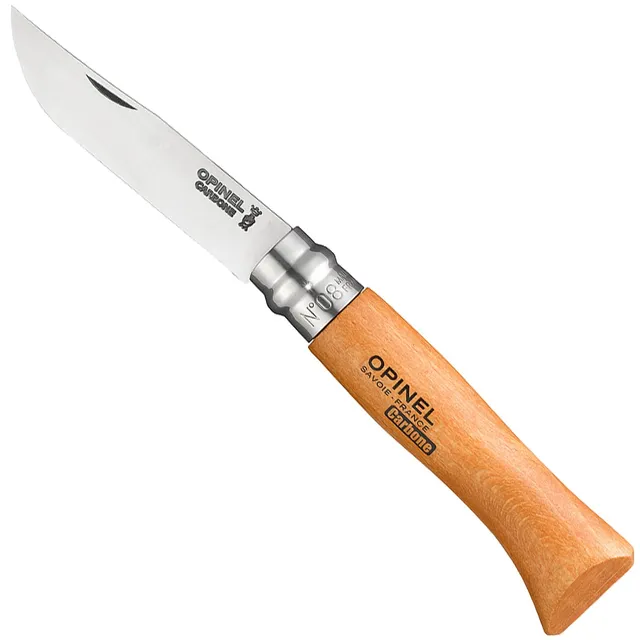
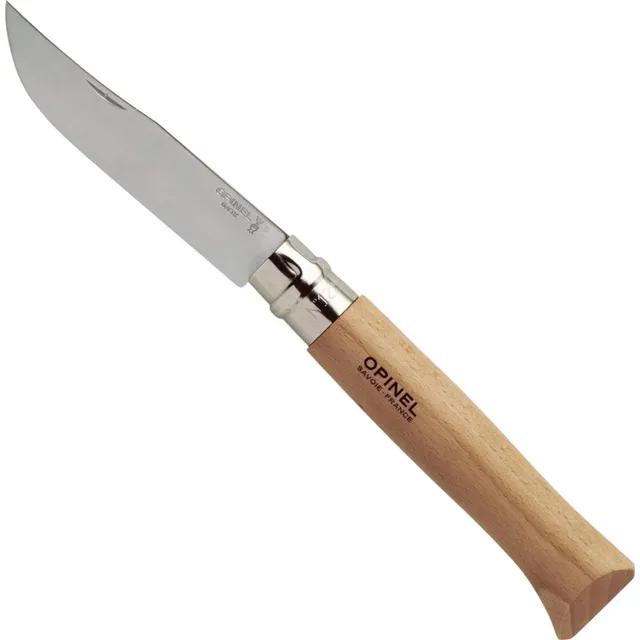
Opinel knives are numbered roughly by blade length. A No.6 is small, perfect for a pants pocket or a child's first knife. A No.12 is a beast, almost like a small cleaver, great for camping or heavy outdoor work. The key question is: what will you use it for?
Here's a quick guide to the most popular sizes:
| Size | Blade Length | Best For |
|---|---|---|
| No.6 | ~2.75 in | Light tasks, home carry, kid's first knife |
| No.7 | ~3.1 in | General EDC, whittling |
| No.8 | ~3.4 in | The most popular, versatile EDC |
| No.10 | ~4.1 in | Outdoor, bushcraft, kitchen |
| No.12 | ~4.7 in | Heavy-duty outdoor, camping |
The No.08 is the sweet spot for most people—it's the classic, the one that fits almost any hand and task. It's also the model most often recommended in EDC (everyday carry) circles. If you're unsure, go with the No.08.
But if you're buying for a specific purpose—like a dedicated camping knife—you might want the bigger No.12. It's still a folding knife, but its substantial blade can handle food prep, rope cutting, and even light woodworking.
One of the defining features of most Opinel knives is the Virobloc locking ring. This stainless steel collar twists to lock the blade open or closed. It's simple, effective, and almost iconic.
Check for the Virobloc: Most Opinel knives have it. Turn it clockwise to lock the blade open; counter-clockwise to unlock. But not all Opinels lock. The smallest sizes (like No.02 through No.05) don't have a locking ring. If you're buying a knife for a child or for safety, you might want one of those tiny non-lockers. But for most adults, a locking knife is safer.
The Néo6: If you're considering a knife for a kid, the Néo6 has a special safety system where the blade can only be opened when a button is pressed. It's a great choice for young users, and it's what sets the Le Petit Chef kids' kit apart.
Before you buy, decide: do you need a locking blade? If yes, make sure the model you're looking at has the Virobloc ring (visible as a metal collar around the handle). If you're buying a No.06 or larger, you're probably fine.
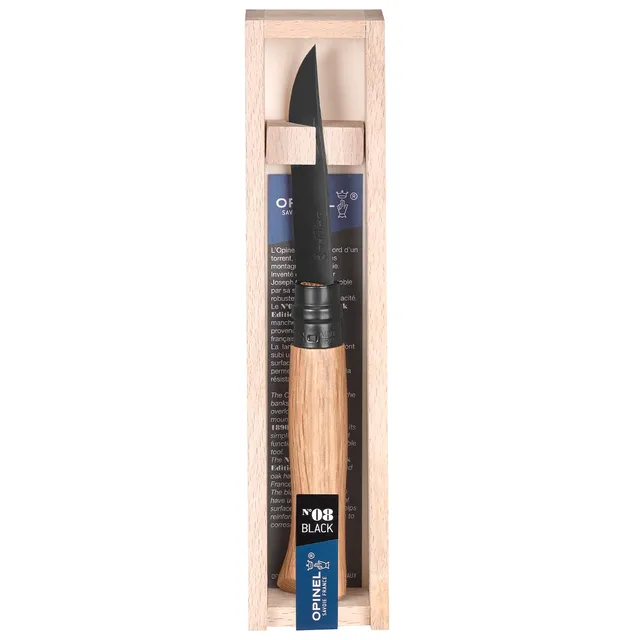
The classic Opinel handle is beechwood. It's light, comfortable, and has that traditional look. But Opinel offers a range of other woods and materials that change the character of the knife.
Which is best? For a first Opinel, stick with beechwood—it's inexpensive, reliable, and quintessential. If you want something more distinctive or gift-worthy, consider the black oak or a Colorama edition. Just remember that non-beech woods might have a slightly different weight and feel.
One more thing: all Opinel handles are designed to be comfortable and functional, but some woods are more resistant to moisture. If you'll be using the knife in wet conditions, consider how the wood will hold up. Beechwood can stain, but it's easy to sand down. A coated handle (like Colorama) is more resistant.
Before you get attached to a specific Opinel, make sure it's legal for you to carry. Laws vary widely by country, state, and even city. In the US, most states allow folding knives under a certain blade length, but some restrict blades over 3 inches or so.
For example:
If you're buying for camping or kitchen use, legality is less of a concern. But for everyday carry, it's a crucial pre-purchase check.
Opinel knives are made in France, and they're so popular that counterfeiters are everywhere. A fake Opinel might look similar, but the steel is cheap, the handle cracks, and the lock can fail—dangerous.
Here's how to spot a real one:
The safest bet? Buy from a reputable retailer. Online marketplaces like Amazon can have fake listings mixed with real ones. Check the seller's history and look for authenticity seals. If you're buying from a store like Blade & Board, you know it's genuine.
Your daily routine should dictate your Opinel choice. Ask yourself:
These questions can save you from buying a knife you won't use. For instance, a pocket knife fanatic might buy the No.12 for camping, but then find it too large for daily tasks. Be realistic about your uses.
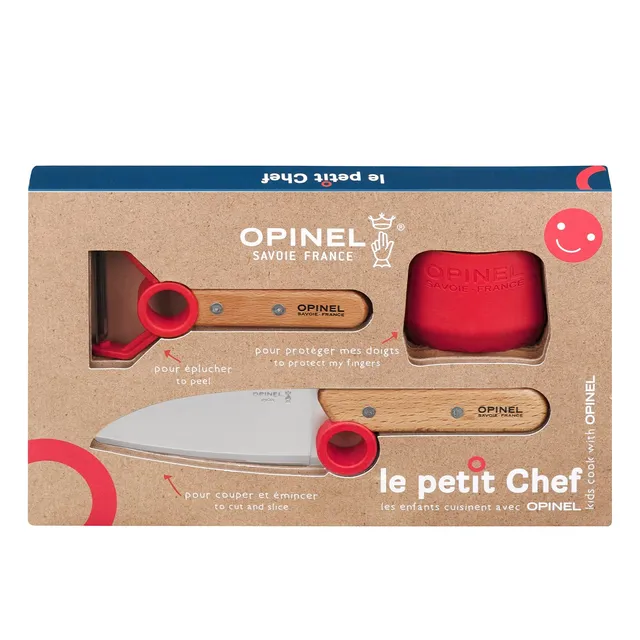
To get the most from your Opinel, plan for a few accessories.
A sheath or belt holster is nice if you'll be carrying the knife roughly—it protects the wooden handle and keeps the knife secure. Opinel makes leather sheaths, but you can also find budget options.
Sharpening tools: An Opinel needs to be sharp to be useful. A simple whetstone or a pull-through sharpener works. If you prefer the classic method, a honing steel or even a ceramic rod is fine. But avoid electric sharpeners—they can overheat the steel and ruin the edge.
For care: If you're buying a carbon steel Opinel, you need oil to protect the blade between uses. Food-safe mineral oil is perfect. For the wood handle, a little beeswax or cutting board cream keeps it moisturized.
These accessories aren't essential to a first purchase, but they'll extend the life of your knife. If you buy a carbon Opinel, don't forget the oil!
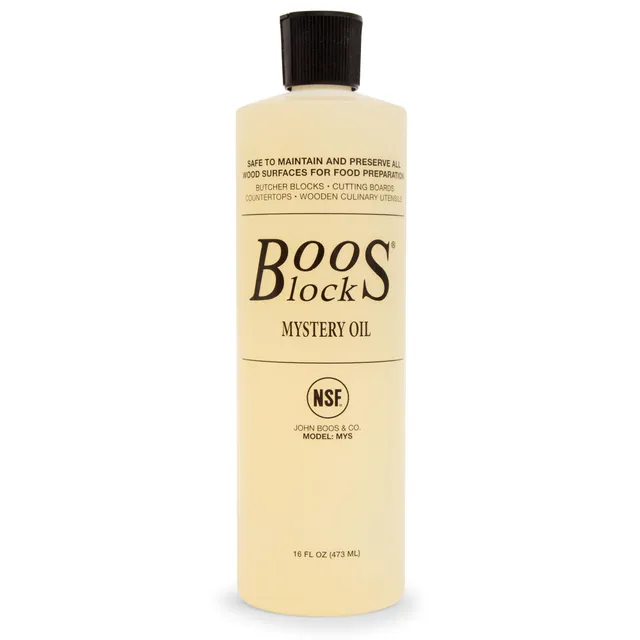
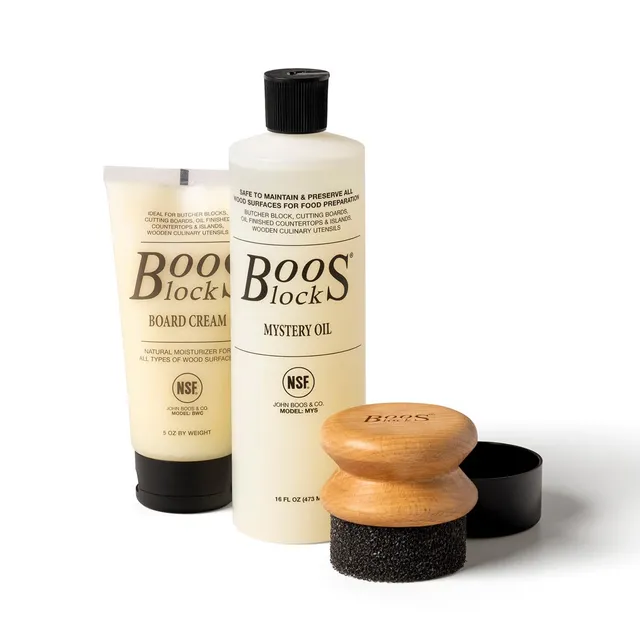
Opinel knives are famously good value. The No.08 carbon is usually around $20, while the No.12 runs about $36. The premium Black Oak No.08 is around $43. That's a remarkably reasonable price for a quality, heritage knife.
But remember: higher-end editions with exotic woods or collectible designs will cost more. Still, no Opinel is outrageously priced compared to high-end folding knives from other brands.
Warranty: Opinel offers a lifetime warranty against manufacturing defects. If your knife fails due to poor craftsmanship, they'll repair or replace it. However, the warranty doesn't cover normal wear, misuse, or damage from improper care—so don't expect them to replace a blade you chipped prying something.
Check the product page for warranty details. Some retailers have their own return policies as well. Know what you're covered for before you buy.
Now you know what to look for. Here's a final checklist to go through before you buy:
With this checklist in hand, you're ready to choose an Opinel that will serve you well for decades—and maybe even become an heirloom. After all, that's the Opinel promise: a simple tool, beautifully made, that lasts.