$20.00
1
Your cart is empty
Subtotal
We will hold your cart for 15:00.
Buy more, save more
Coupon discount
Shipping
Add 2 more items to unlock your free mystery gift.
Complimentary item.
Total
$20.00
We will hold your cart for 15:00.
So, you're thinking about buying an Opinel. It's a great choice. These French-made knives are legendary for their simplicity, sharpness, and value. But here's the thing: there are a lot of Opinels out there, and picking the wrong one is easier than you think. I've been collecting and using Opinels for over a decade, and I've seen everything from guys buying the wrong size to people ruining their carbon blades with a trip through the dishwasher.
Whether you're an outdoor enthusiast, a home cook, or someone who just appreciates a fine pocket knife, this guide will steer you clear of the 7 most common mistakes and set you up with the Opinel that fits your life perfectly. Let's dive in.
The single most common mistake is not understanding how Opinel sizing works. The numbers (#01 through #13) correspond to the length of the blade in centimeters (with a few exceptions). So, a No. 08 has an 8 cm blade, a No. 06 has a 6 cm blade, and so on. Sounds simple, right? But you'd be surprised how many people buy a #12 because they think 'bigger is better,' only to find it's too bulky for everyday pocket carry.
Here's a quick rule of thumb:
So, ask yourself: what will I use this for? If it's everyday carry, a No. 06 or No. 08 is perfect. If you're feeding a group of people, a No. 10 or No. 12 might be more appropriate.
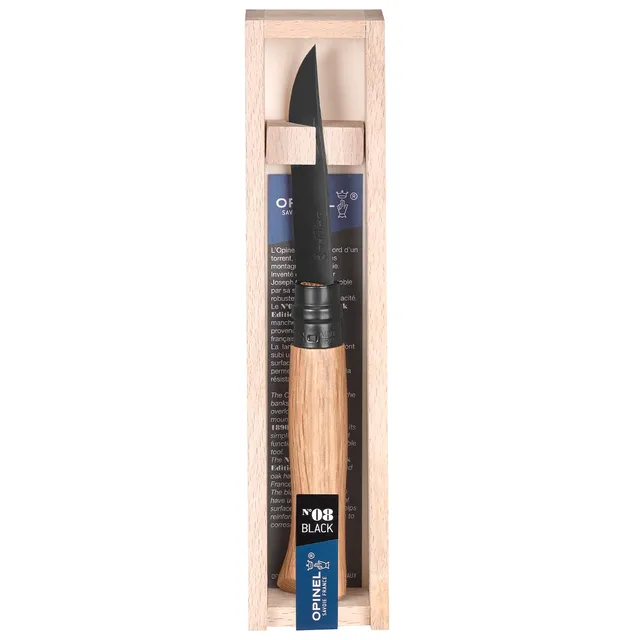
One of my all-time favorites is a No. 08. It's the classic you've seen a hundred times on Instagram. But here's a version you might not know about: the Opinel No. 08 Stainless Steel Folding Pocket Knife – Black Oak Handle. It takes the timeless No. 08 shape and adds a beautiful (and durable) black oak handle. This one is a real step up in style and feel when compared to the standard beechwood.
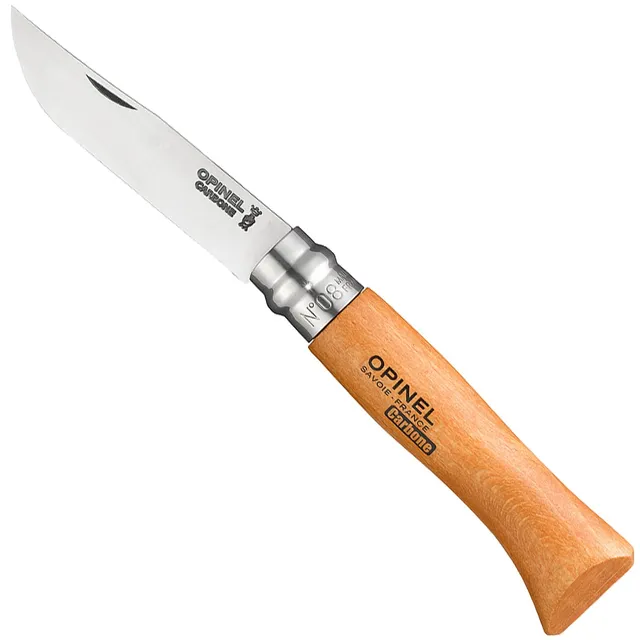
But if you're on a budget and just want the classic that launched a million campfire conversations, the standard No. 08 in Carbon is a fantastic (and arguably more authentic) choice. We'll talk about the carbon vs. stainless debate next, because it's a big one.
This is a hundred-year-old debate, and it's not going away. Here's the quick version:
Which is right for you? If you're a collector, a traditionalist, or you really enjoy the ritual of caring for your gear, go carbon. But if you're buying your first Opinel for everyday use, or if you live in a humid climate, stainless is the smarter choice. You'll probably end up with both eventually—they're that different.
And here's a pro tip: if you do go carbon, never put it in the dishwasher, don't leave it wet, and don't store it in a leather sheath (it holds moisture and accelerates rust).
Let me show you a great example of a stainless model. The Opinel No. 12 INOX is a big, serious blade that's perfect for camp kitchen duty or heavy food prep. It's 12 cm of stainless steel that won't flinch at a crusty loaf of bread or a butternut squash. But again, only buy this size if you know you'll use it.
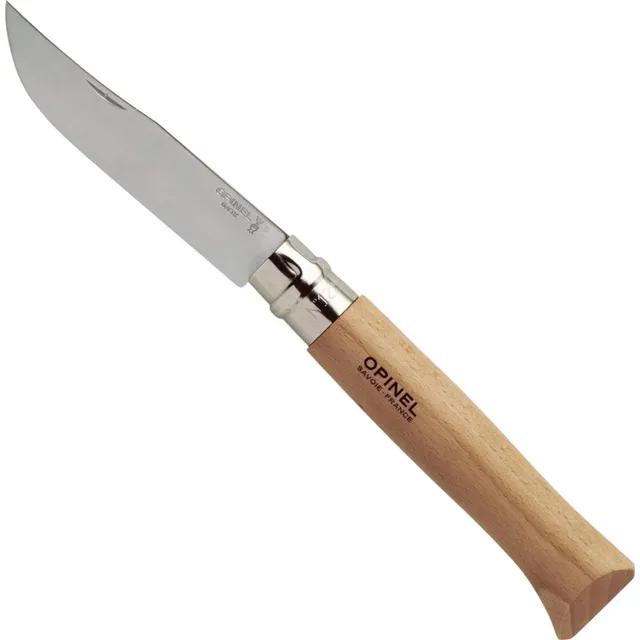
Most Opinels 'classic' folding knives use the ingenious Virobloc system—a rotating collar that locks the blade securely when opened. This is a fantastic feature, but many buyers don't realize that not all Opinels have it. Some models, especially some of the 'Slim' or 'Effilé' lines, use a simpler friction mechanism without a lock.
If you're going to be doing any serious cutting, you absolutely want a locking blade. A non-locking Opinel can close on your fingers if you're not careful, especially if you grip it tightly. Check for the Virobloc ring before you buy. It's a simple visual check.
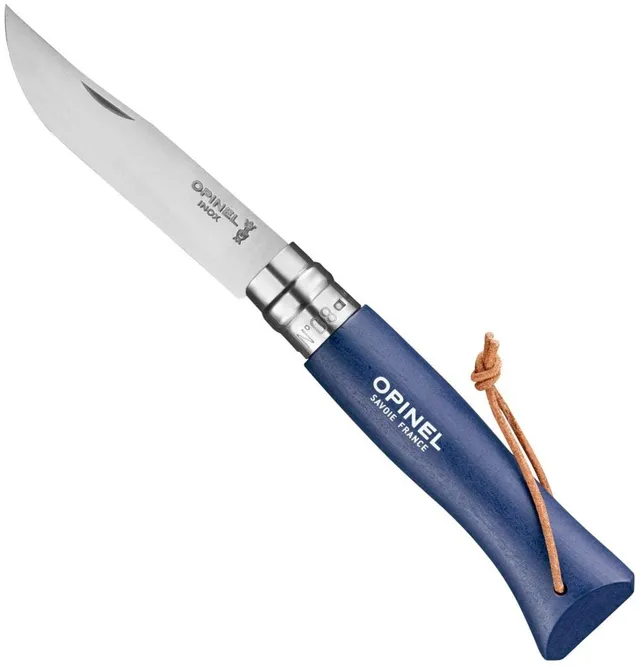
The Opinel Colorama Series No.8 is a perfect example of a locking knife with a lot of personality. It's a fully functional Virobloc model, and the painted hornbeam handle adds a splash of color to your pocket. It's one of those knives that makes you smile every time you pull it out.
Beechwood is the classic, and it's great. But Opinel now offers a dizzying array of handle options: classic beech, natural oak, black oak, hornbeam, olive wood, and even synthetic composites on some models. The handle affects the weight, the grip, and the look.
If you have large hands, you might want a bulkier handle. If you're a lefty, you'll appreciate that Opinels are ambidextrous. And if you're buying a knife for a child, size and weight matter a lot. The Opinel No. 08 in beechwood is fine, but the Black Oak version has a denser, more elegant feel that many people prefer.
For a unique look that screams 'different', check out the Opinel No. 08 Stainless Steel Folding Pocket Knife – Black Oak Handle. It's a premium take on a classic, and that handle just feels better in hand.
And if you're buying for kids, there's a whole range of Opinel 'Le Petit Chef' sets that come with safety guards and child-friendly colors. That's a whole different mistake you don't want to make: buying a full-size knife for a child. We'll touch on that next.
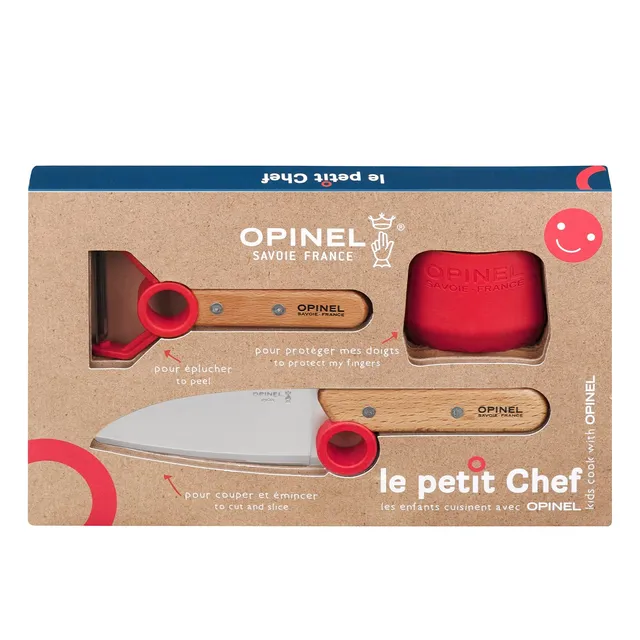
If you're buying an Opinel for a child, it's easy to just grab a No. 06 and call it a day. But that's a big safety no-no. Opinel makes a special line called Le Petit Chef specifically for kids. These knives have a rounded tip, a finger guard, and often come with a matching peeler. They're designed to teach kids how to cook safely, without turning them into a trip to the ER.
It's actually a beautiful concept: real tools for real learning, but with kid-safe design. The Opinel Le Petit Chef 3-Piece Set is a stellar example—it comes with a chef's knife, a finger guard, and a peeler. It's the kind of gift that can ignite a lifelong love of cooking.
An Opinel is a tool, but it's also a piece of crafted wood and steel. If you treat it well, it will last for decades. The most common care mistake is putting it in the dishwasher. The high heat, the harsh detergents, and the moisture will strip the wood's natural oils, cause the wood to crack, and dull the blade. Never, ever put an Opinel in the dishwasher.
Instead, wash it by hand with mild soap and water, and dry it immediately. Periodically, you should also treat the wooden handle with a little food-safe mineral oil or a butter block conditioner. This keeps the wood hydrated and prevents it from drying out and checking.
For blades, the care regimen depends on steel type. Stainless is mostly set-and-forget, but you should still wipe the blade relatively dry before storing. Carbon needs more attention, as we discussed.
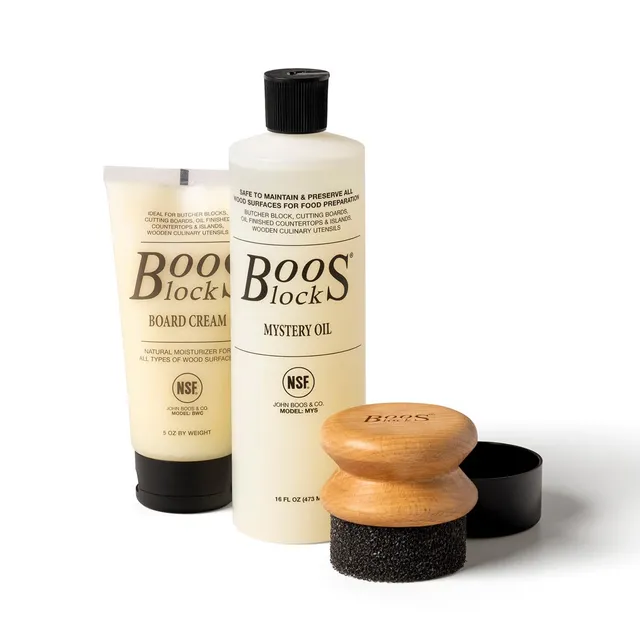
And here's a tip for your other kitchen tools: while an Opinel isn't a full-size chef's knife, you might also be looking at a proper kitchen knife upgrade. If you have a beautiful wooden cutting board from John Boos (we won't make a mistake and put a fine Japanese knife on a glass board!), you need to treat that wood properly too. A dedicated board oil, like the John Boos 3-Piece Care Set, is essential. It's not a mistake you'll want to make twice.
Let me show you that set now.
Opinel's popularity has made it a target for counterfeiters. These fakes are often made with inferior steel, won't hold an edge, and might have a blade that fails at the worst possible moment. Here's how to spot a real one:
Beyond counterfeits, there's also the temptation to buy an overpriced 'collector' model that you'll never actually carry. Deciding between a No. 06 and a No. 08 is more important than a special edition. Focus on finding the right knife for your hands.
Let's summarize the whole buying process with a quick decision guide. I'll walk you through a mini check: your intended use, your care tolerance, and your budget. Ask yourself these questions before you add to cart.
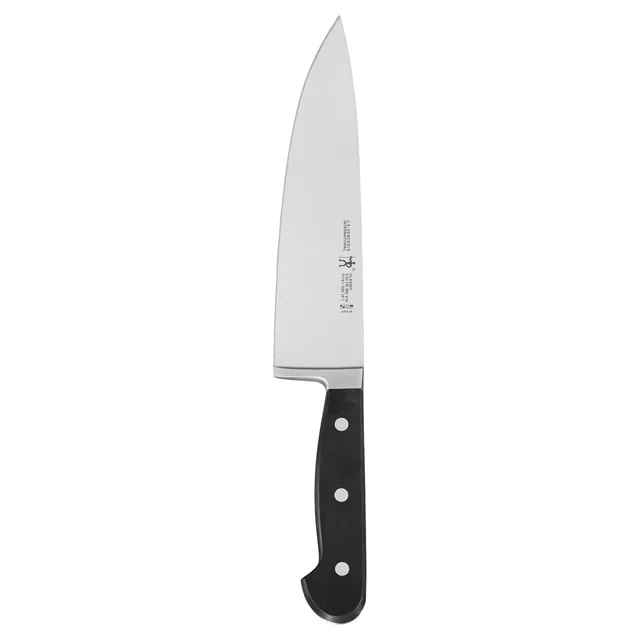
Now, you might be asking: 'What about Opinel kitchen knives vs. something like a classic German chef's knife?' Opinel makes some great paring knives and prep tools, but if you're looking for a full-size chef's knife, you might want something from the HENCKELS Classic line, for example. They pair beautifully with an Opinel in your pocket or your camp bag. We have you covered there too!
Here's my final, no-hesitation advice, based on typical use cases:
Avoid these mistakes, and your Opinel will become one of your most-used, most-loved tools. It's a simple piece of kit, but it's sharpened by decades of design and a whole lot of French know-how.
Shop the full collection in our Folding Knives category to compare even more sizes and handle options. Still not sure? Talk to us in the comments below, and we'll help you pick the right one.
Yes, the vast majority of Opinel knives are made in France in the Savoy region. The company still prides itself on its French manufacturing heritage.
The Virobloc is a two-part metal collar around the handle. When you rotate it, one part slides over the blade's tang, locking it securely. To unlock, you rotate it back. It's brilliant, simple, and effective.
Absolutely not. The high heat and detergents will ruin the wooden handle and can even accelerate rust on carbon steel blades. Always hand wash and dry.
Carbon steel (usually marked 'Carbon' or 'XC70') takes a razor edge and is easier to sharpen but will patina and rust if not cared for. Stainless steel (marked 'INOX') is more corrosion-resistant and requires less maintenance, but it edges a bit less eagerly.
For everyday carry, a No. 06 or No. 08 is ideal. For camping, the No. 08 or No. 09 works well. For kitchen prep, larger sizes like No. 10 or No. 12 are better. The No. 08 is the most popular for good reason.